Antique Fan Repair

Repair • Restoration • Preservation
Vintage Machines.
Lasting Stories.
Rescue
Archive
Machines abandoned • history recovered

Back FromScrap

Some machines arrive dusty. Some arrive tired. These are the others: bent, abandoned, seized, corroded, discarded and nearly lost. Back From Scrap documents the machines that looked beyond saving, and the work required to put history back in motion.

Scrap yard survivors • barn finds • severe-condition restorations • preservation before replacement
Case File 001 • Scrap Yard Recovery

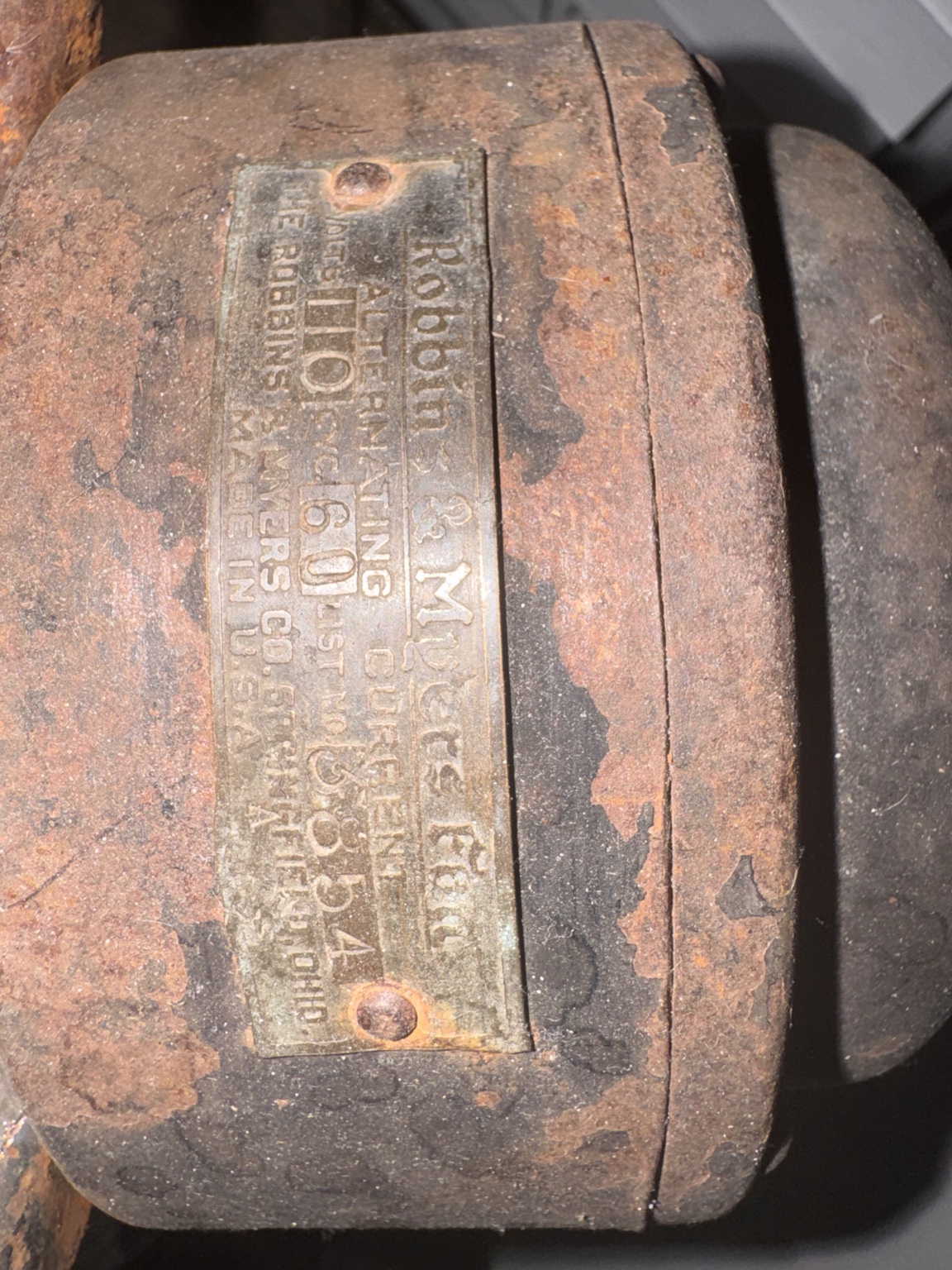
Robbins & Myers 3854

✦

A 105 year old brass-blade Robbins & Myers fan pulled from a scrap yard in severe condition. Before a screw is turned, the machine is documented exactly as found. The damage, missing pieces, original finishes and surviving hardware all become part of the restoration plan.

The Rescue

R&M 3854 Brass-Blade Fan

Pulled directly from a scrap metal heap, buried under decades of debris. Cast iron coated in grime and oxidation, four solid 16-inch brass blades tarnished black and knocked out of true, head wire turned to chalk, and bearings locked tight. In 1921, this 22-pound industrial workhorse retailed for $35—the modern equivalent of over $500, or nearly half a month’s wages for the average worker. To see a machine engineered for a century of service destined for the crusher is why we do this!

Recovered Source: Scrap Yard
Condition: Severe
Status: Preservation Complete

As Found Robbins and Myers 3854 antique fan in severe scrap-yard condition
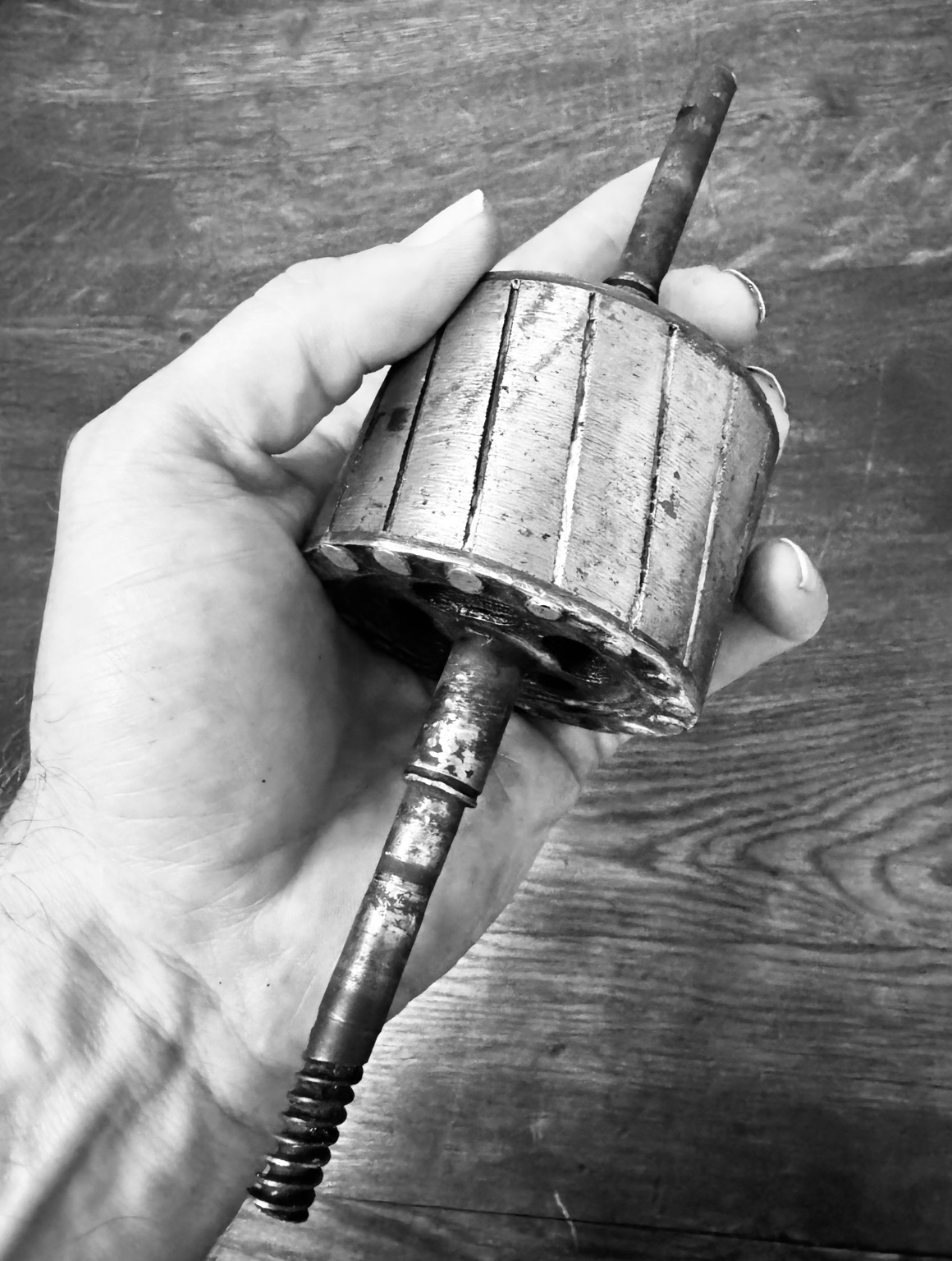
The Survivor Robbins and Myers 3854 antique fan rotor

Condition on Arrival

  • Scrap-yard storage and severe accumulated grime & decay
  • Severely distorted guard, heavily tarnished & bent brass blades, extensive corrosion, rust and missing hardware
  • Electrical system - Non-Existent! 
  • Mechanical condition and bearing wear not yet established, but probably bad. 
  • Original finishes and hardware to be documented before intervention!

Restoration Objective

  • THE SURVIVOR: The R&M 3854 could not be returned to service, but not everything was lost. After a difficult extraction from the failed stator, the original rotor was recovered intact and preserved as an artifact of the machine's construction and history. The remaining viable components will be preserved or made available as original replacement parts for other R&M 3854 restorations.

    Sometimes preservation doesn't mean making a machine new again. Sometimes it means saving what remains.

MakerRobbins & Myers
Model3854
OriginScrap Yard Find
Current StatusNot Returning to Service
Case File 001 • Working Record

Bench Log

A running record of what this machine reveals as it comes apart. Findings are recorded before cleaning or correction so the restoration tells the truth about what was actually found.

R&M 3854
Case Closed

Recovered from the Scrap Heap

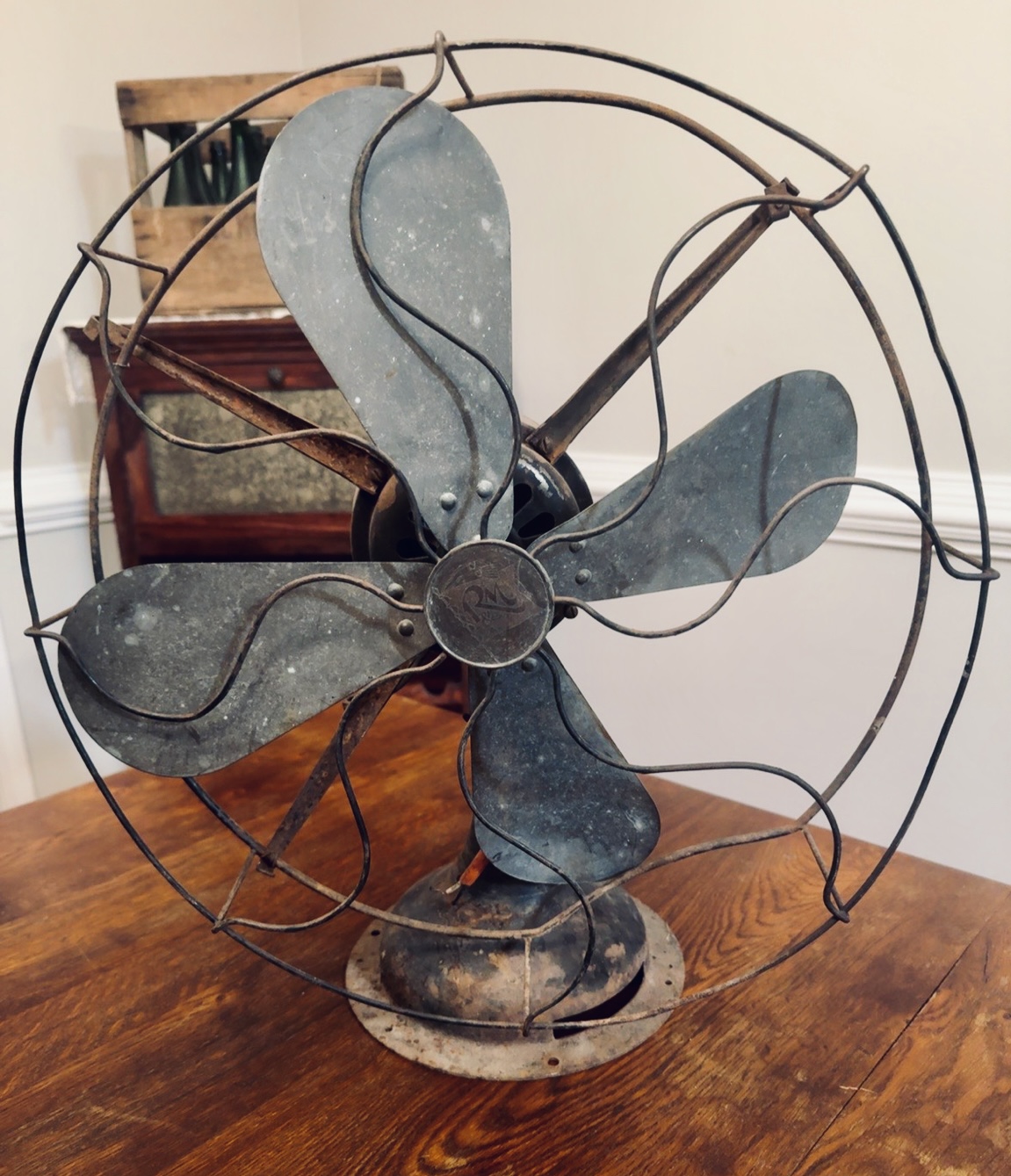
Fan documented in as-found condition before intervention. Heavy oxidation and grime cover the cast-iron body, the guard is severely distorted, the four brass blades are heavily tarnished and out of true, and the electrical system is incomplete and unsafe for power.

BENCH NOTE: No power applied. Preserve first, diagnose second.
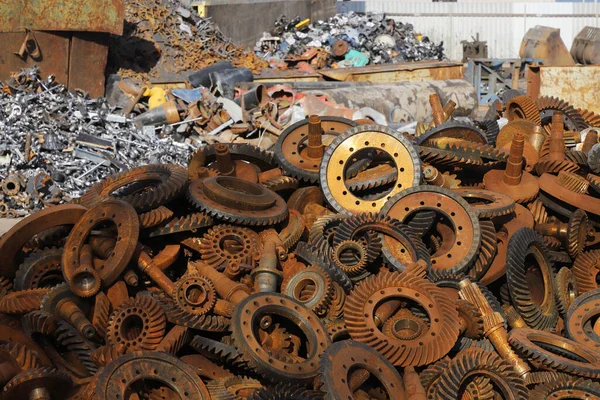
1920 Robbins and Myers 16-inch Model 3854 electric fan buried in scrap yard metal pile prior to rescue

As Recovered

Condition Recorded Before Teardown

Badge, cage, blade assembly, motor housing, base, switch area, oscillator and surviving hardware are photographed and cataloged. Missing pieces, original finishes and evidence of previous work will be noted before parts are cleaned.

FINDING: Mechanical and electrical condition remain unverified until controlled disassembly and testing.

Robbins and Myers Model 3854 brass badge, distorted steel wire cage guard, and tarnished blade survey before teardown

Initial Survey

Base Opened for Inspection

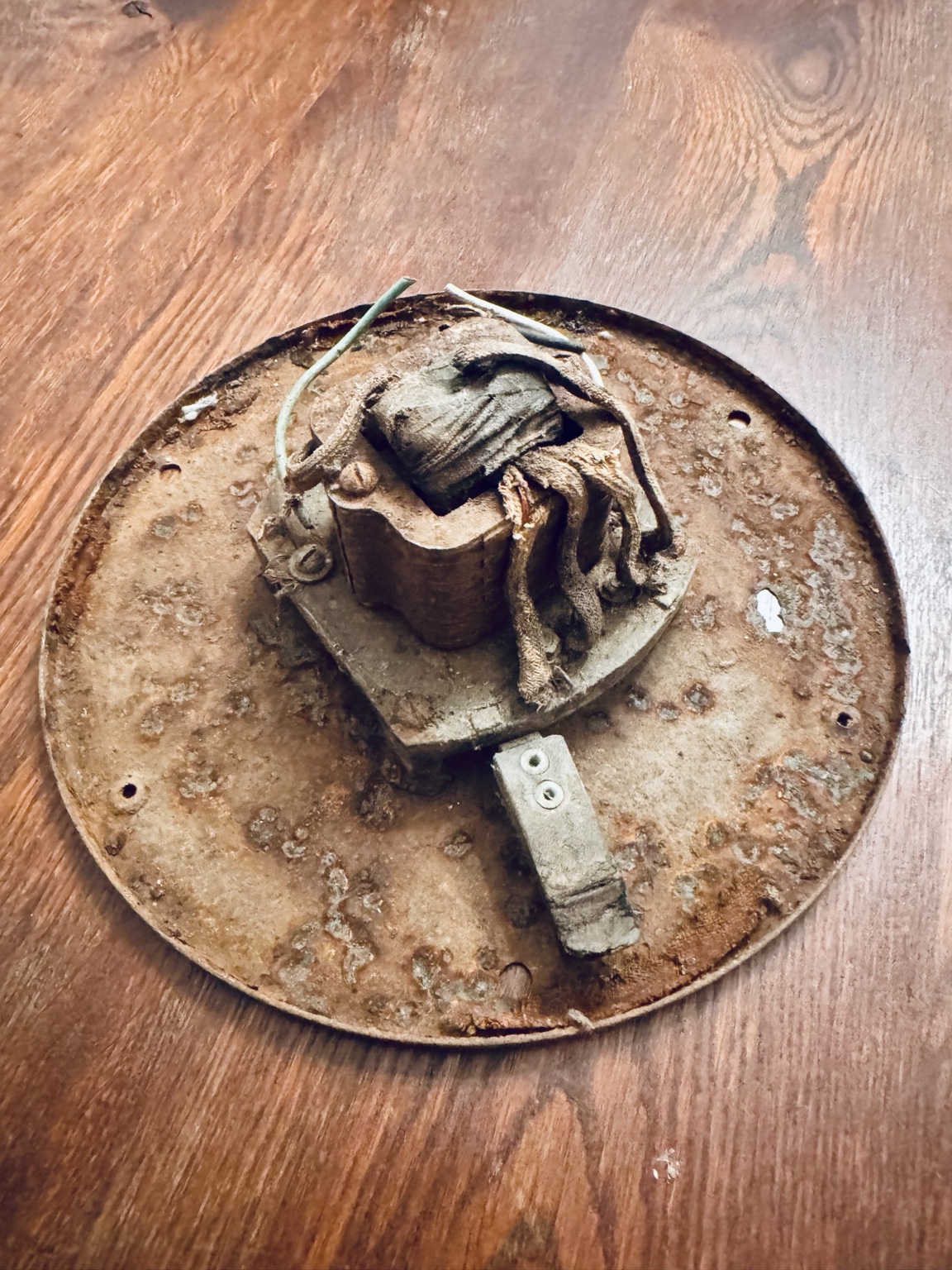
The underside exposes the surviving switch components and deteriorated cloth-covered conductors. Wiring condition will be documented lead by lead before anything is removed, with the original routing retained as a reference for reconstruction.

BENCH NOTE: Existing insulation is visibly deteriorated. Circuit identification and continuity checks come before replacement.

Underside of cast iron antique fan base exposing deteriorating cloth wiring, lever switch contacts, and empty speed coil cavity

Base / Electrical

Brass Hides Beneath the Ruin

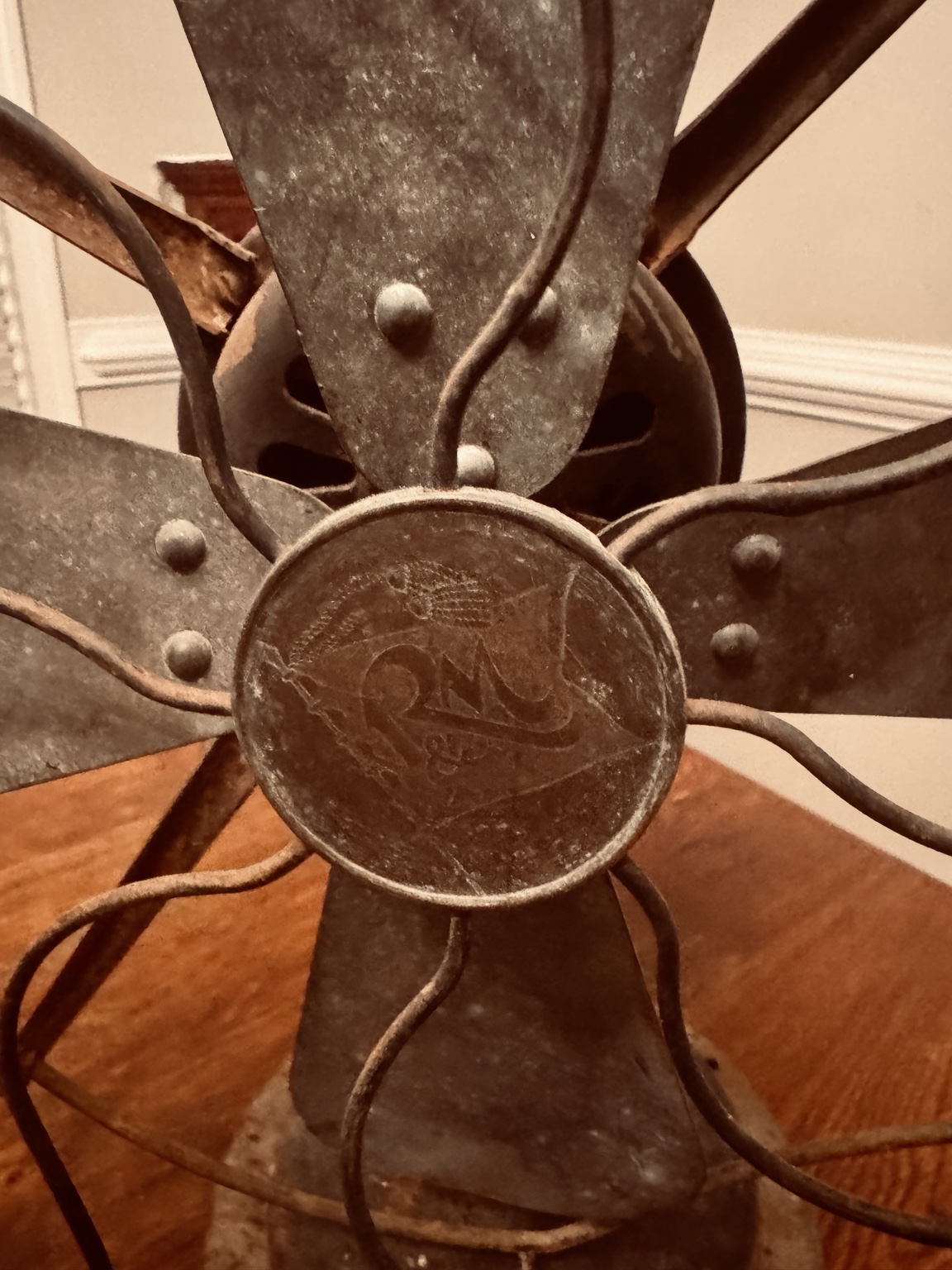
During the initial material assessment, the heavily darkened blade assembly was tested with a magnet and found to be non-ferrous. Inspection confirmed the surviving four-wing assembly is brass beneath decades of oxidation and contamination.

STATUS: Solid brass verified. Truing and sympathetic finish preservation to follow. Awaiting polishing! (smiles) 

Surviving four-wing solid brass blade assembly and hub for 1920 Robbins and Myers fan confirmed non-ferrous under oxidation

BRASS BLADES DISCOVERED!

Motor Teardown & Electrical Diagnosis

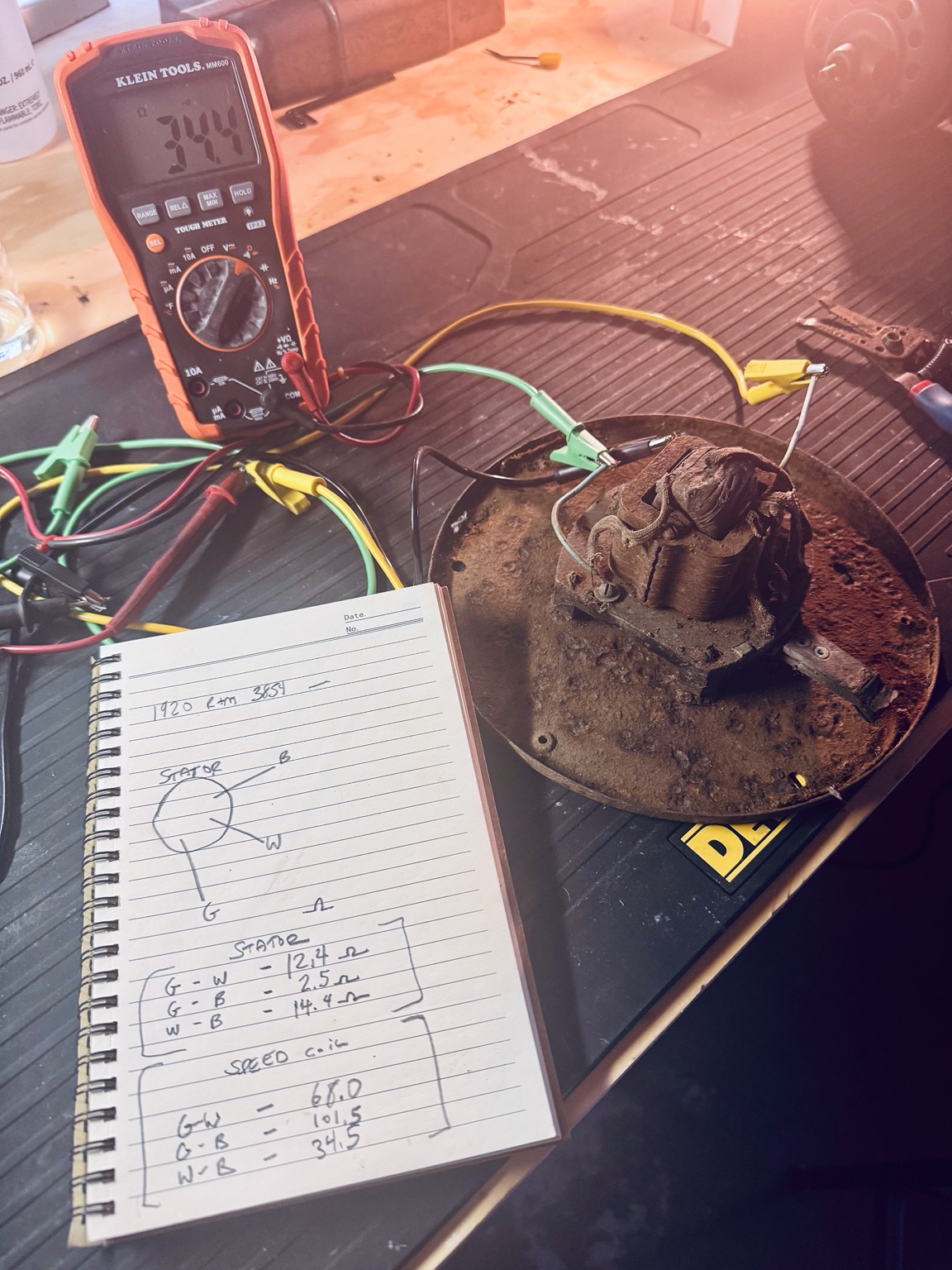
The cast-iron clamshell parted cleanly under controlled heat. The field coil laminations show heavy surface grime but zero core separation. Insulation resistance testing to frame ground passed safely, and copper winding continuity remains balanced across all speed taps. As expected, original head stator wire leads are brittle and shed cloth  upon handling—a complete replacement with period-correct, lacquered cotton braid is required. Front and rear bronze sleeve bearings show minimal shaft play and will be repacked with fresh wool felt.

BENCH NOTE: Primary stator windings and speed coil both show continuity and pass preliminary isolation-to-core testing. Original head-wire harness requires complete replacement before reassembly. Speed coil remains electrically intact despite severe deterioration of the surrounding insulation and conductors.

Insulation resistance and continuity diagnosis on exposed Robbins and Myers 3854 motor stator field coils using digital multimeter

Motor / Diagnosis

Housing Split, Rotor Extraction & Winding Survey

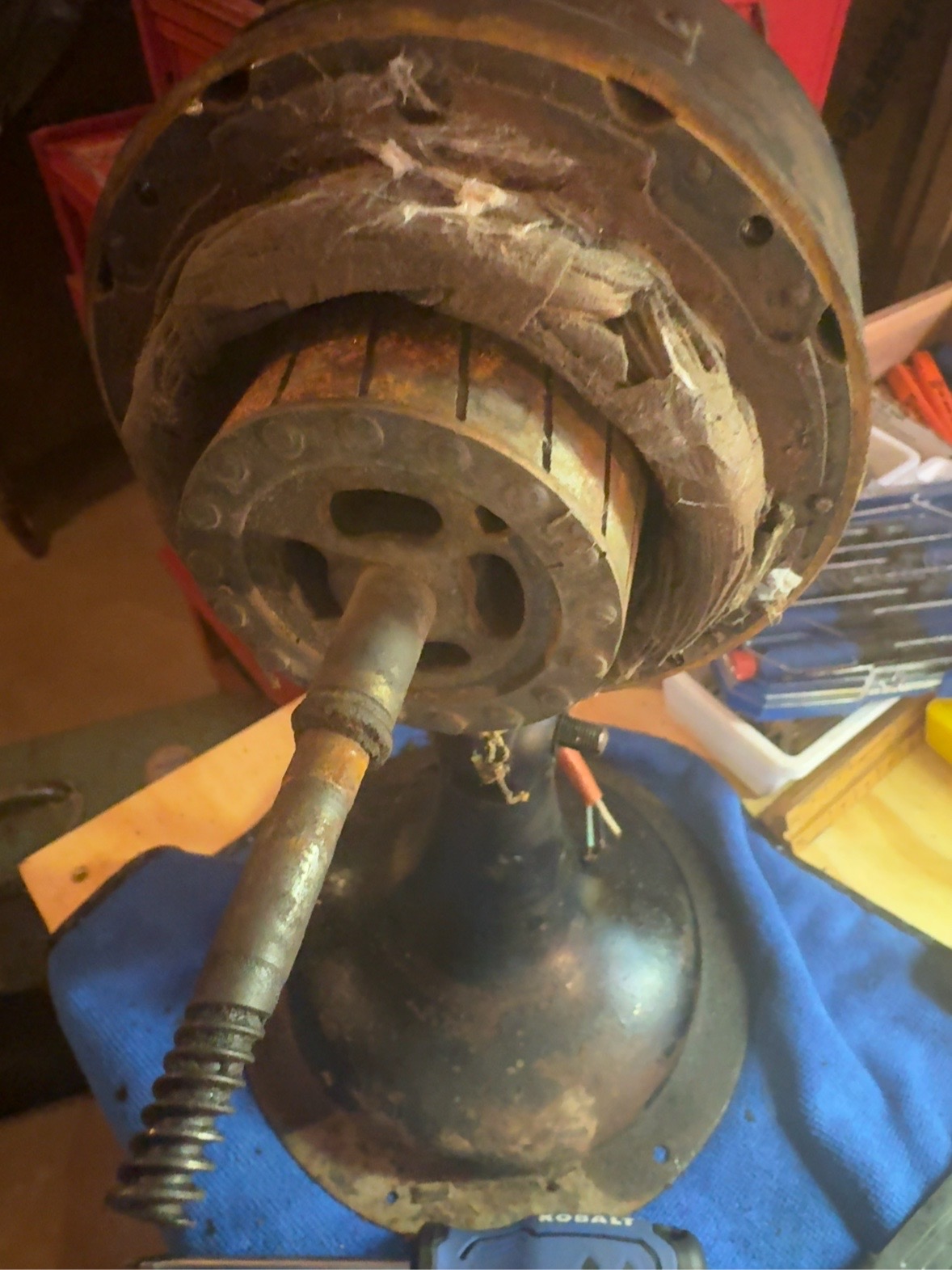
The motor clamshell was separated to expose the century-old internal core. Initial rotor extraction revealed the skew-slotted rotor, rear worm-drive shaft and the original stator field assembly beneath heavily deteriorated insulating material. The rotor moved forward substantially but could not be fully withdrawn; resistance at the rear shaft/bearing area halted further disassembly rather than risk damage to the shaft, bearing or motor casting. With the rotor partially withdrawn, the condition of the stator could be examined for the first time. The original wrapping and insulation are severely aged, with extensive deterioration surrounding the field assembly. The condition of the underlying stator laminations and windings cannot yet be considered serviceable until further inspection and electrical testing are completed.

BENCH NOTE: Rotor extraction halted after encountering significant resistance. No additional force will be applied until the obstruction is identified. Stator insulation is severely deteriorated; winding and core condition remain under evaluation. Dire situation. The scrapyard machines smile. :-)

1920 Robbins and Myers 3854 motor housing split showing extracted rotor, shaft drive worm gear, and stator coil bundle

Motor / Diagnosis

Saving What Remains - The Story of the Survivor

After a prolonged fight with corrosion, deteriorated insulation and a motor that had likely been undisturbed for decades, the original rotor was finally extracted intact. Subsequent testing after full access to the stator confirmed open windings, superseding the preliminary continuity observations recorded earlier in the teardown. Electrical testing confirmed that the stator windings had failed, and their severe physical deterioration made restoration impractical. The decision was made to preserve the components that could still be saved rather than sacrifice original parts attempting to return an unsalvageable motor to service. The rotor was recovered without damage and will be preserved as an artifact of the original Robbins & Myers 3854 motor. Other serviceable and historically useful components were also retained. This fan will never run again, but its story did not end in the scrap yard.

BENCH NOTE: Time to put the tools down - Sometimes preservation means restoring a machine. Sometimes it means saving what remains. The Scrapyard machines quietly turn away knowing this was indeed a victory for historical Americana. :)

1920 Robbins and Myers 3854 motor housing split showing extracted rotor, shaft drive worm gear, and stator coil bundle

Motor / Diagnosis

The Restoration Log

From Wreck to Running

✦

The point is not to make an old machine look newly manufactured. The point is to discover what survived, repair what failed, and let the finished fan still look like it has lived a life.

⌕

Document

Photograph the fan exactly as recovered: badge, blade hub, cage, switch, oscillator, wiring, hardware and every clue to its original construction.

⚙

Stabilize

Free seized parts carefully, remove destructive contamination and determine which components can be preserved before disassembly goes any further.

ϟ

Repair

Evaluate windings, insulation, switch, head wire, bearings, shaft and oscillator. Correct faults using the least invasive repair that returns safe function.

✦

Return

Reassemble, lubricate, balance, verify current draw and operating temperature, then perform an extended run before declaring the machine back in service.

Rescue Archive

Machines That Refused To Disappear

✦

The archive will grow one impossible-looking machine at a time. Each rescue gets its own condition record, repair story and before/after documentation.

Case File 001 • Closed

R&M 3854

Brass-blade Robbins & Myers fan recovered from a scrap yard in severe condition. Preservation concluded after the failed stator was documented and the original rotor was recovered intact.

CASE FILE 002

The next machine nobody thought was worth saving.
CASE FILE 003

Reserved for another survivor.

“Not every old fan needs to look new. Some just need someone to believe there is still a machine under the rust.”Antique Fan Repair • Back From Scrap

Have something that looks beyond saving?

Barn find? Rusted-out? Damaged? Let the workshop see it first.

Send clear photographs of the fan, motor tag, cage, blade, base and damaged areas. Severe condition does not automatically mean the machine is finished.

Start a rescue evaluation Open the workshop intake form →
Or email info@antiquefanrepair.com with photographs and any history you know.