Motor & Stator Work
Inspection, cleaning, continuity testing, insulation assessment and hand rewinding when a failed winding truly requires it.
Early Electric Machines • Carefully Preserved
Expert repair, restoration and preservation of vintage and antique electric fans. From everyday icons to rare models, each machine is treated with the care and craftsmanship it deserves.
Inspection, cleaning, continuity testing, insulation assessment and hand rewinding when a failed winding truly requires it.
Replacement of brittle or unsafe wiring with carefully routed cloth-covered wire and appropriate strain relief while preserving period appearance.
Bearing and shaft inspection, lubrication system service, oscillator repair, gearbox cleaning, switch service and careful blade balancing.
Conservative cleaning, paint stabilization, brass care, wax protection and refinishing when preservation alone will not return the fan to a presentable state.
Follow current arrivals, active repairs, work in progress and recently completed fan restorations from the shop.
Some machines arrive dusty. Some arrive tired. These are the others: bent, seized, corroded, discarded and nearly lost. Follow the rescue archive as severe-condition machines are documented, evaluated and given every reasonable chance to survive.
It's rare to find such a high level of Old World craftsmanship as there is at Antique Fan Repair. Andy treated my 1919 oscillating fan as if it were his own. His restoration work was top notch and his updates throughout the process were greatly appreciated. I wanted the fan to be restored in order to pass it on to the next generation in my family. Thanks to Antique Fan Repair, I can do so knowing that the fan is in better condition than ever. Great work!
I was very pleased to find Antique Fan Repair and work with them! I sent my Emerson Electric fan to them and this was a family heirloom. I found them to be professional and timely and I am excited to have the fan back in great condition!
Reviews shown above are from customers who posted publicly on Google.
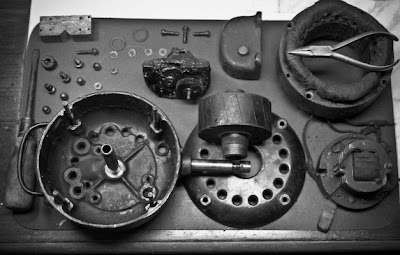
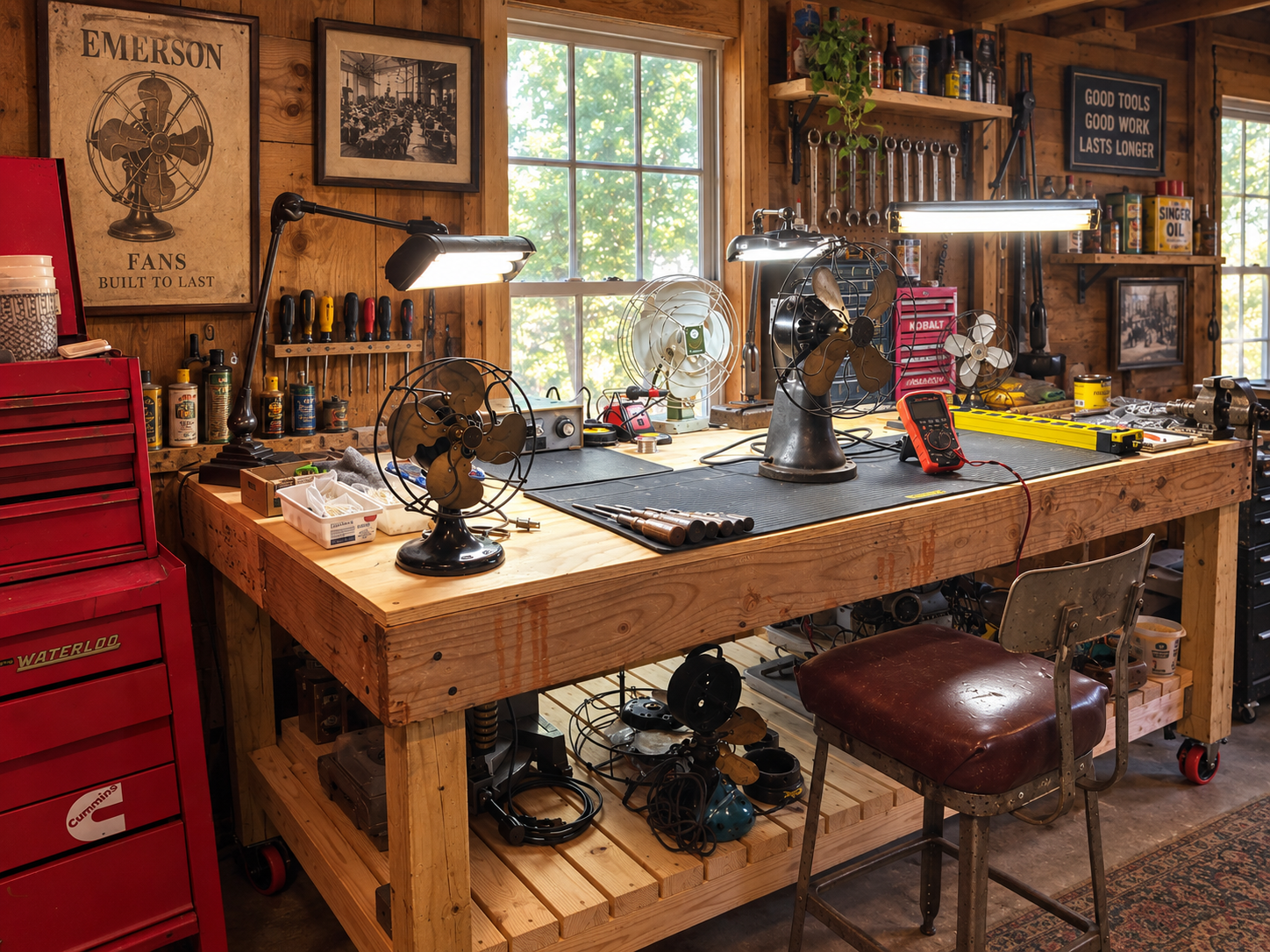
Photograph condition, wiring, hardware, markings and assembly details before disassembly.
Check windings, switch, insulation, bearings, shaft, oscillator and power draw before deciding what needs intervention.
Correct electrical and mechanical faults with the least invasive method appropriate to the machine.
Clean, preserve or refinish components according to condition, originality and the owner's goals.
Run the fan through its operating range, verify speed control and oscillator function, and watch temperature and current behavior.
Early electric fans were built as durable machines, not disposable appliances. Their castings, windings, bearings, switches and mechanical oscillators reward patient diagnosis and careful workmanship.
The workshop welcomes many American and European makes, including examples from:
Maker names are used for identification only. AntiqueFanRepair.com is not affiliated with or endorsed by these manufacturers.
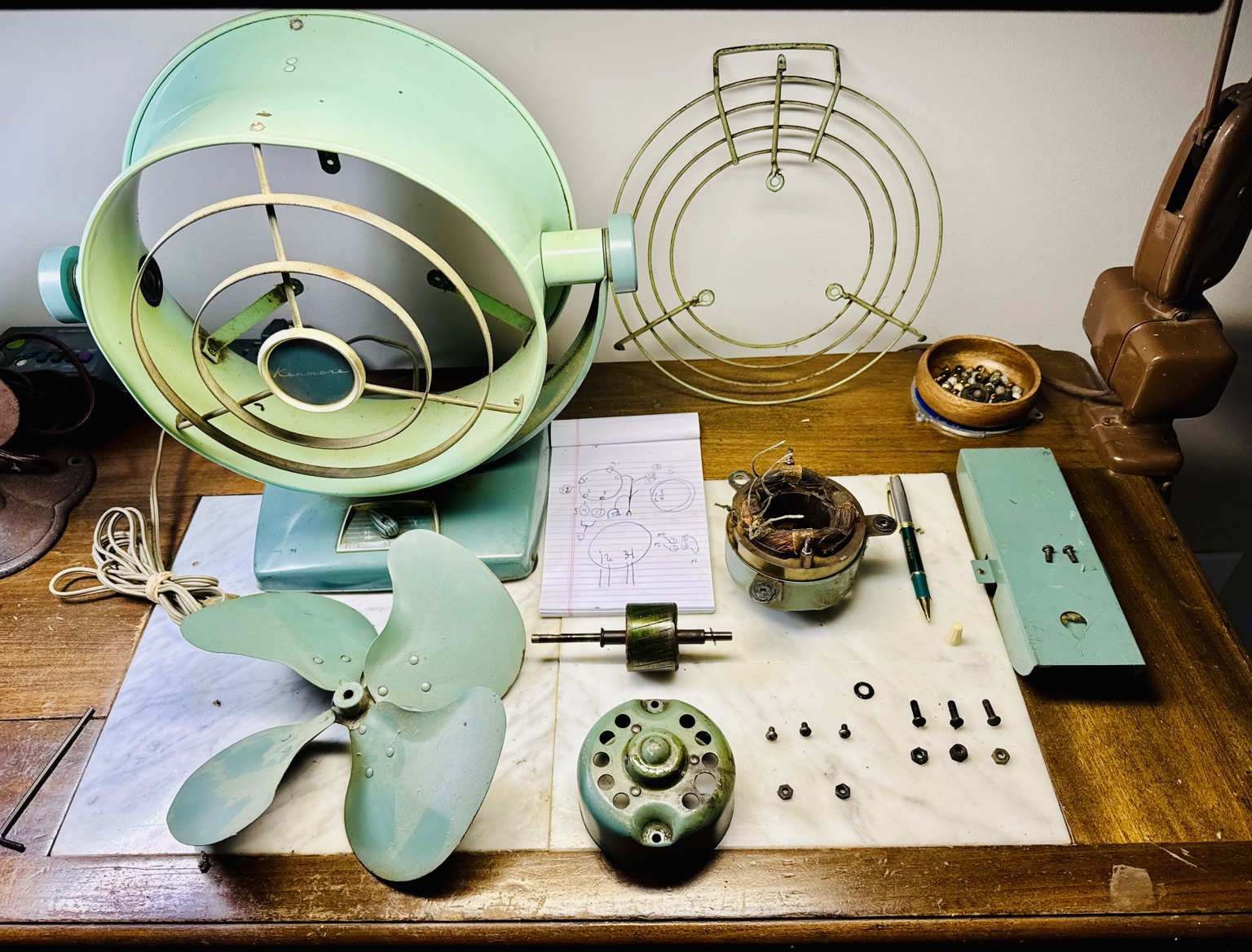
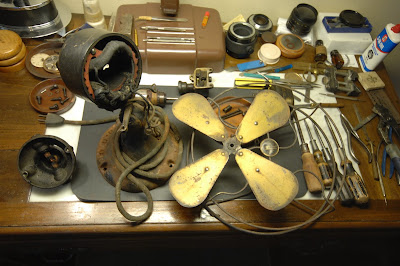
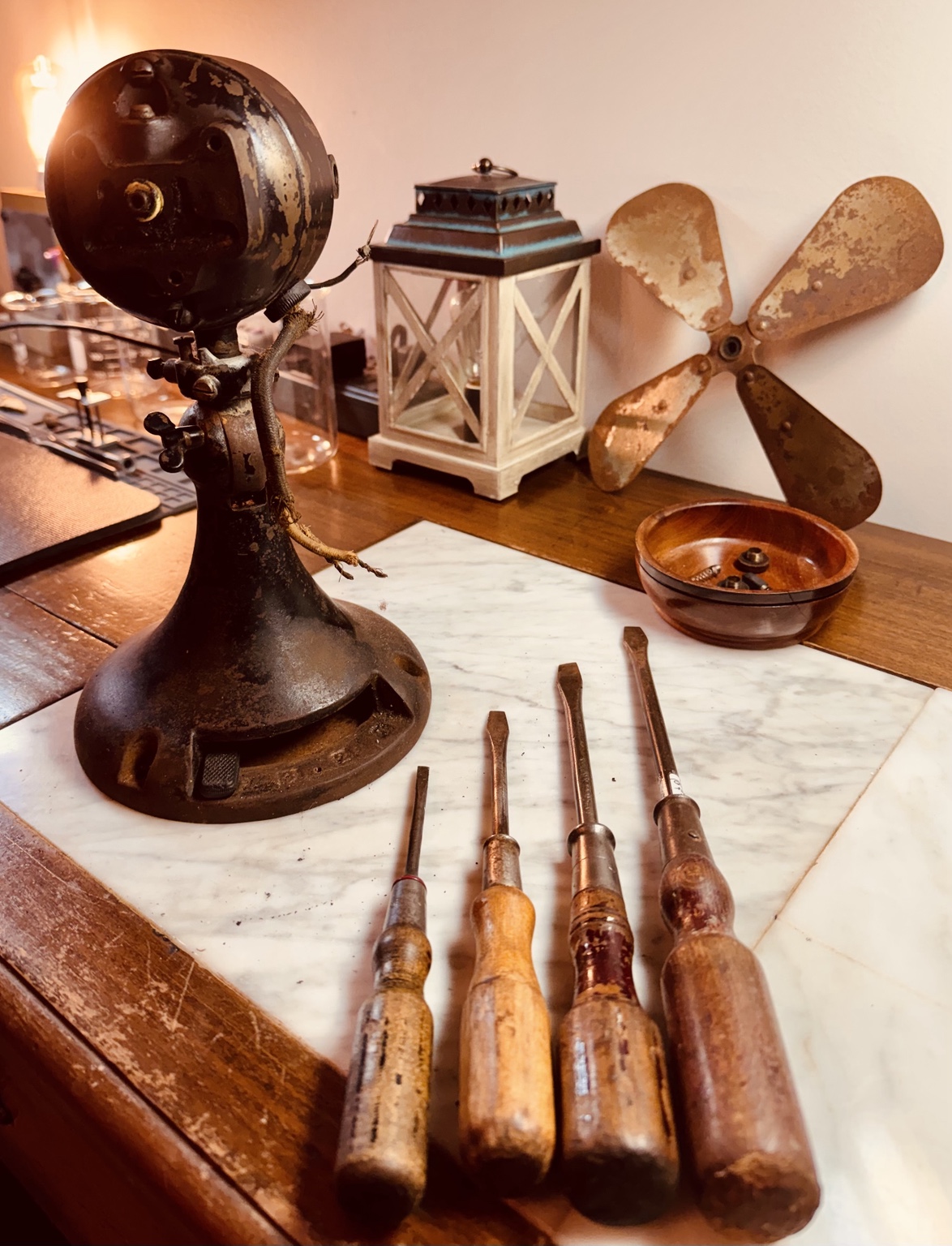
Guard, blades, motor housings, hardware and hand tools laid out for methodical restoration work.
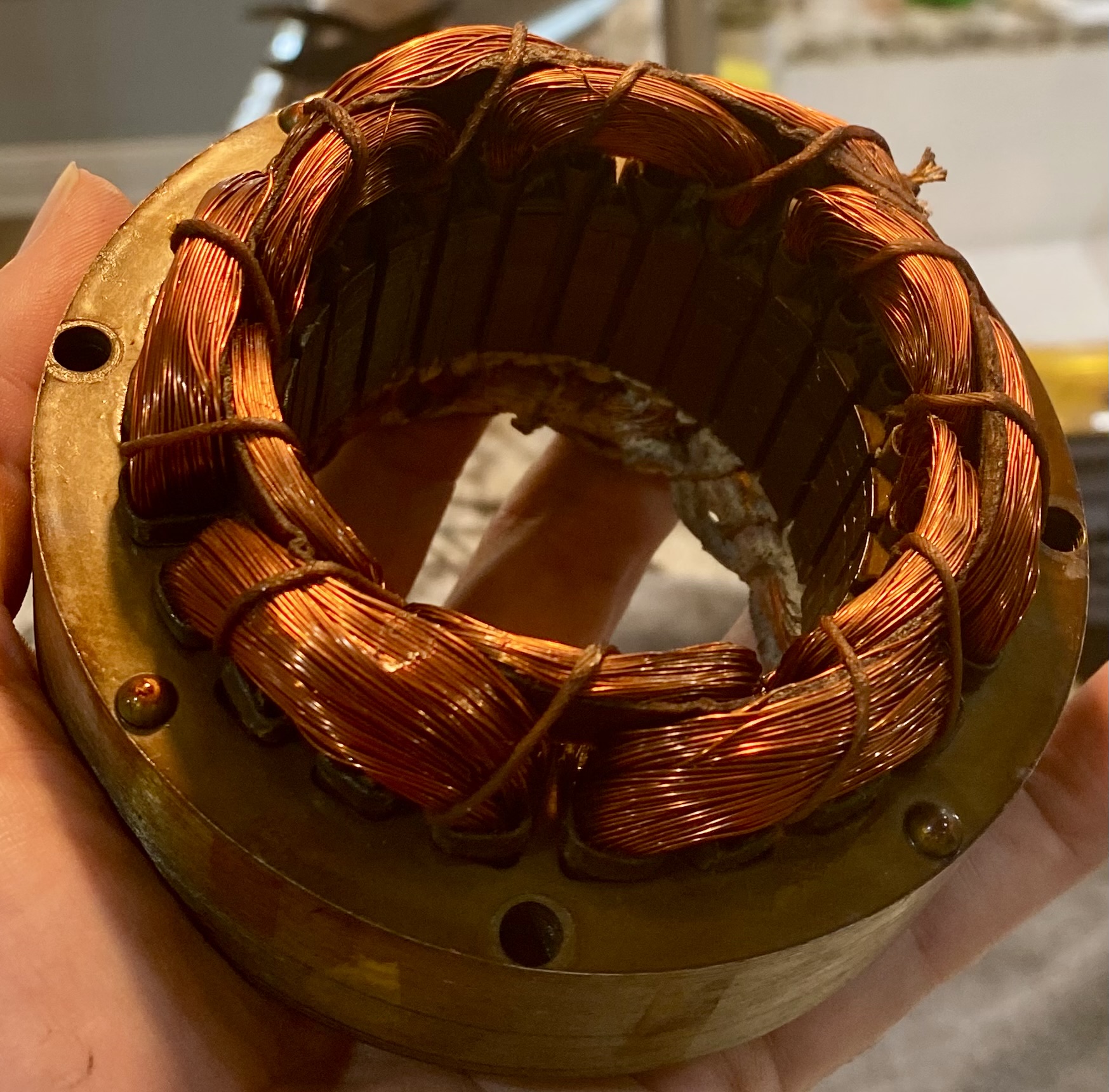
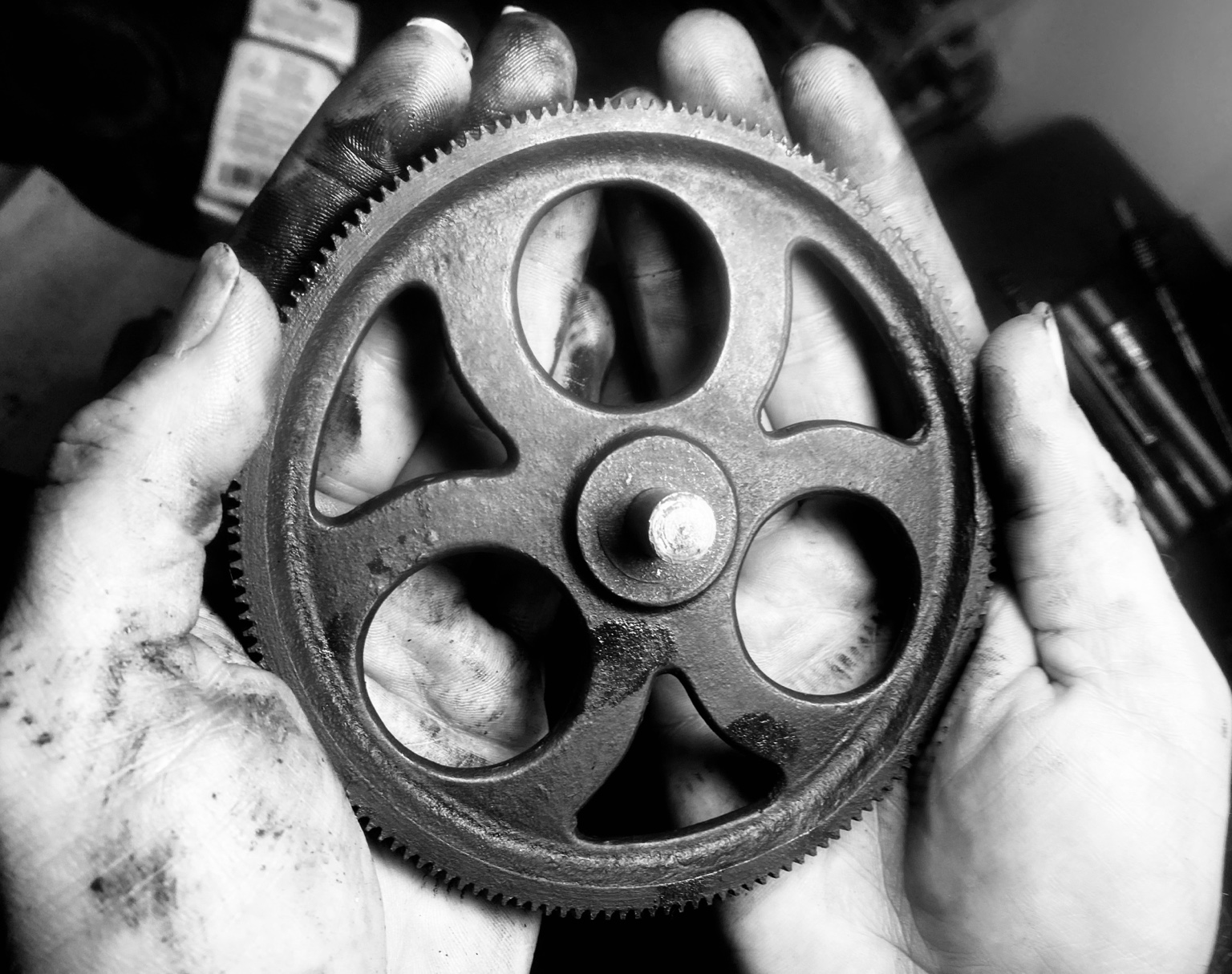
Cloth wire, copper windings, stator work and the patient bench labor hidden inside a successful repair.
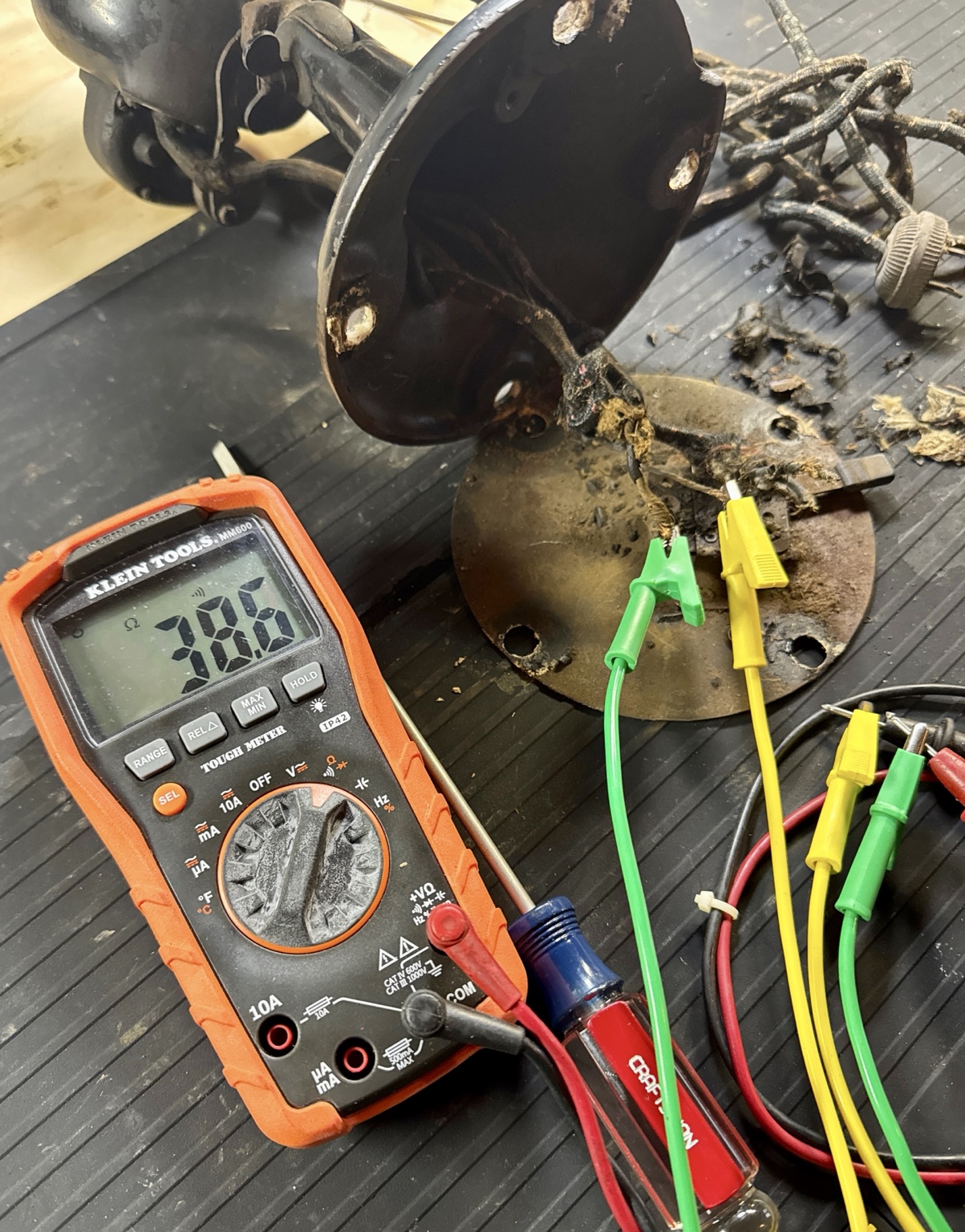
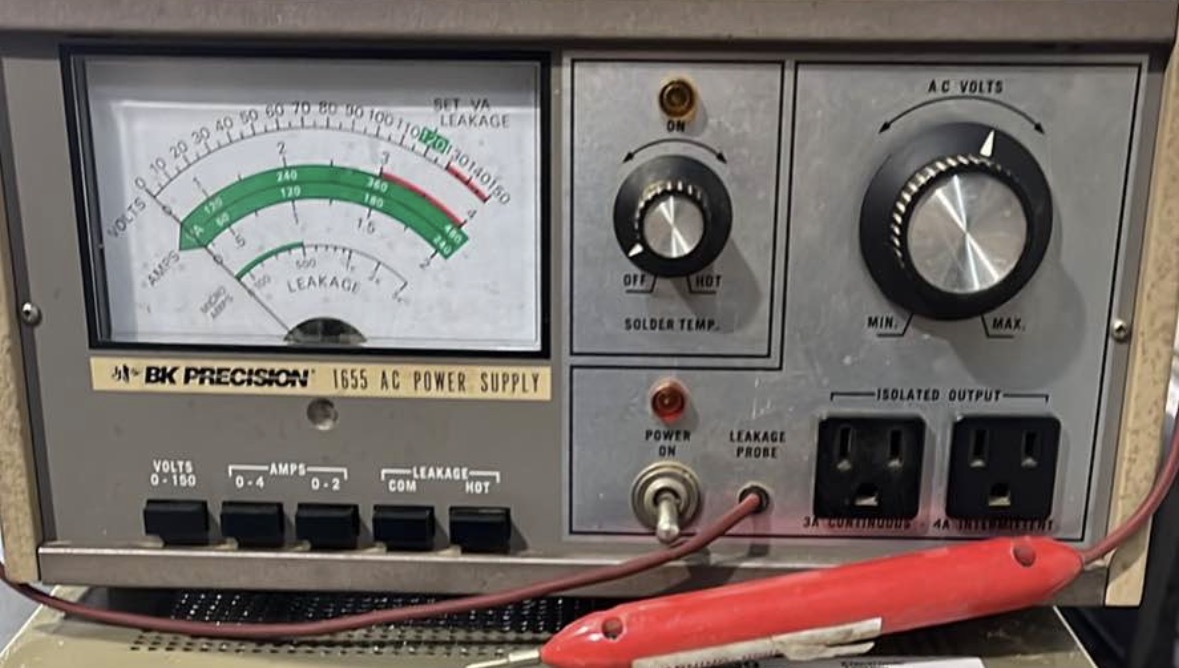
Operating checks, meter readings and final evaluation before a restored fan is considered ready to go home.
These photographs below show the actual work: worn machines as they arrived, disassembly on the bench, and the finished fans after repair and restoration.
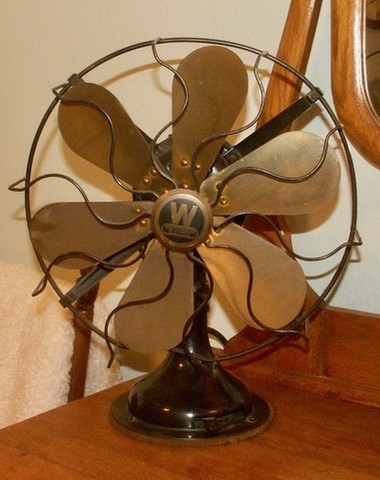
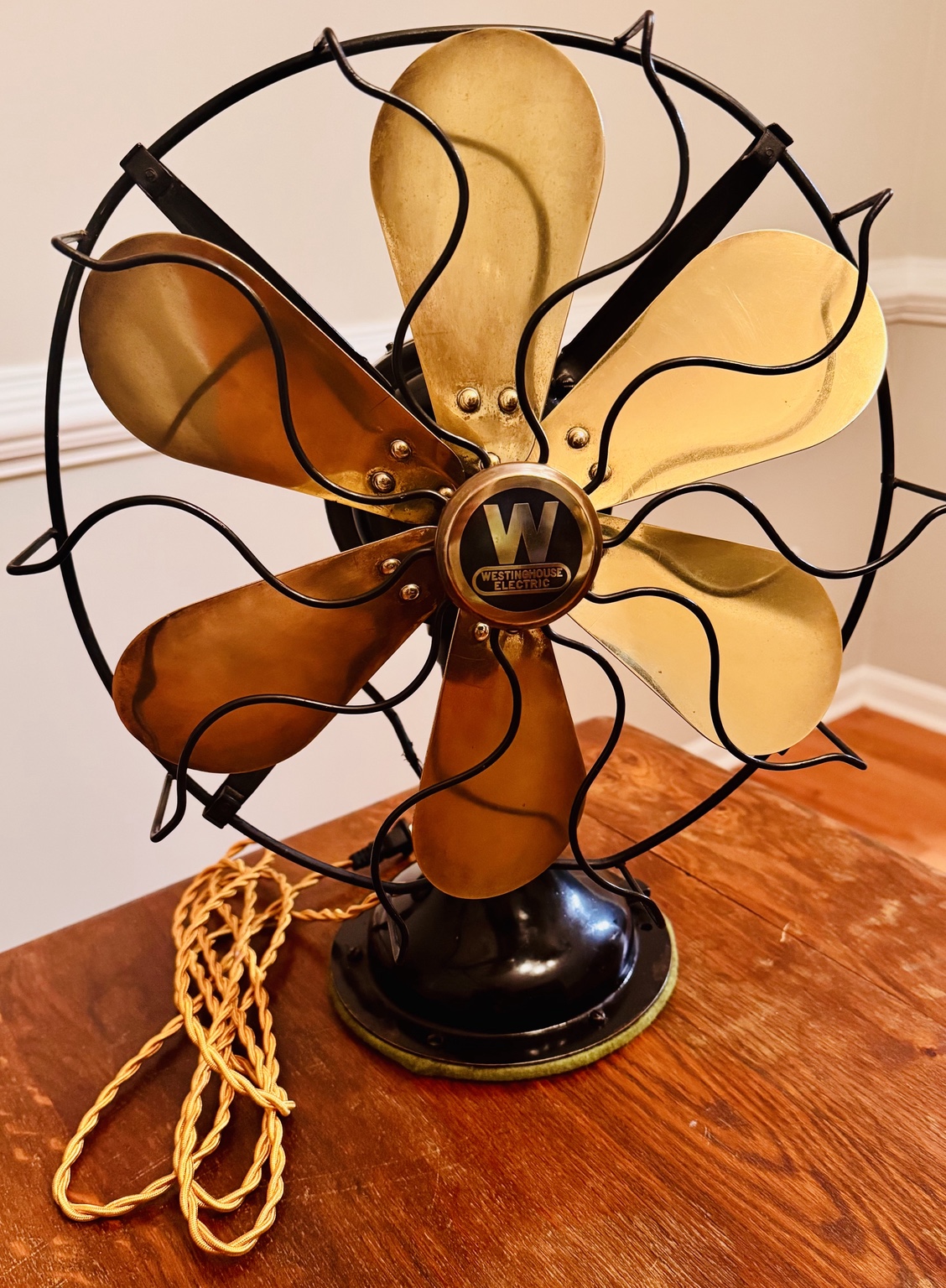
A 1919 Westinghouse six-blade brass fan carefully cleaned, mechanically and electrically serviced, and hand-polished while preserving its original finish, patina and character.
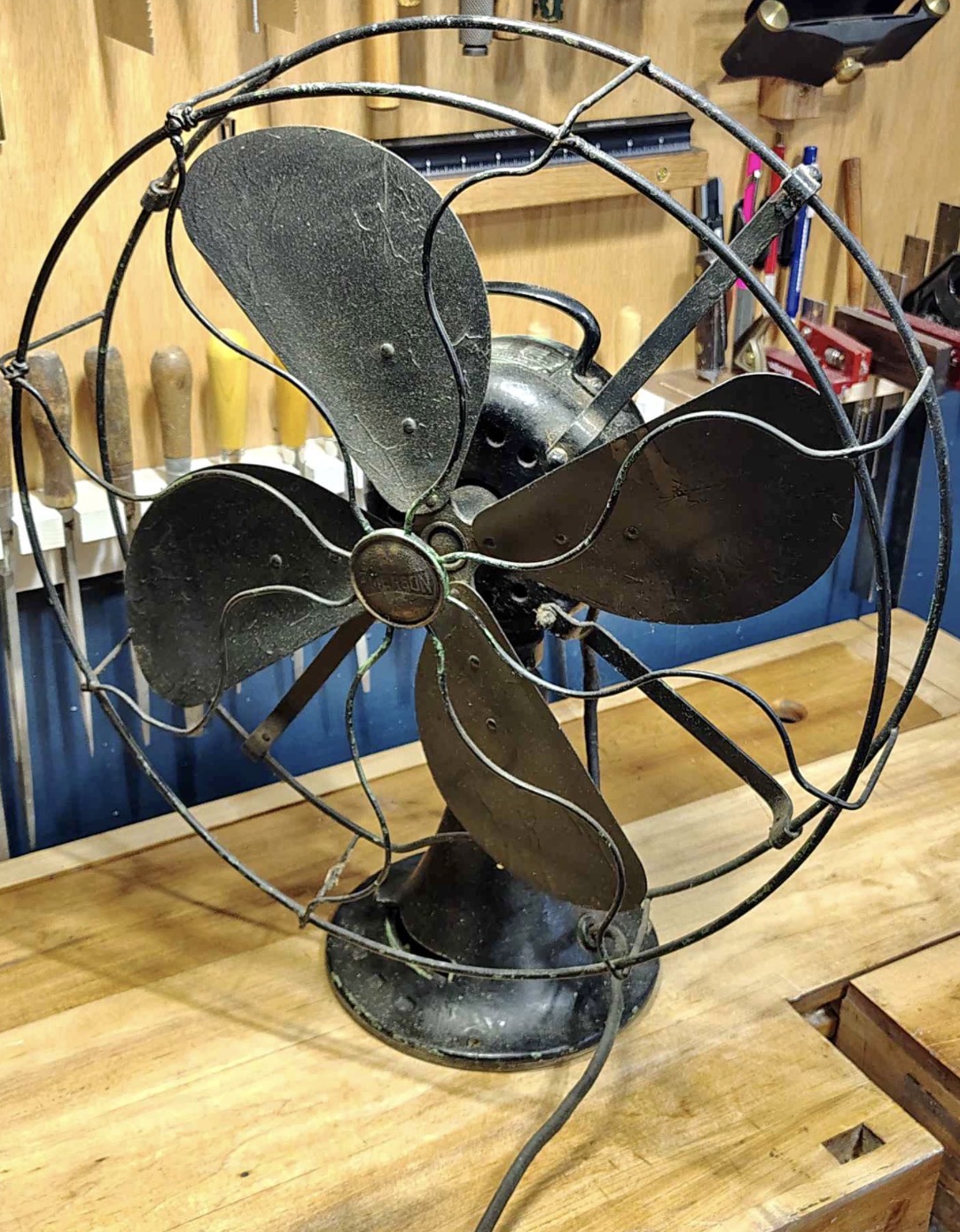
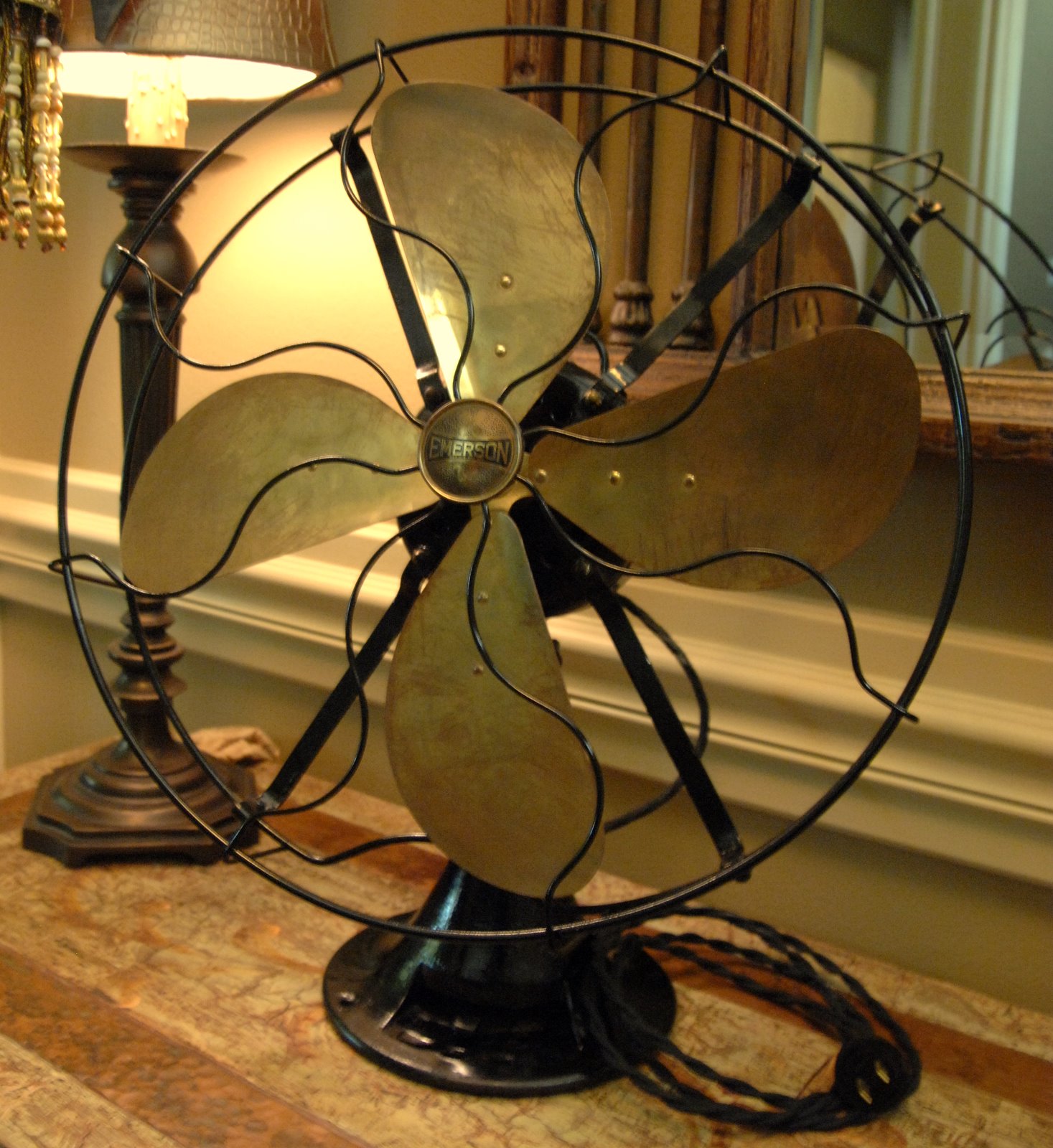
An early 1933 Emerson 73648-AK fan returned to an updated restoration of all mechanical & electrical systems. Careful, respectful preservation of the original brass blades to maintain 93 year-old patina.
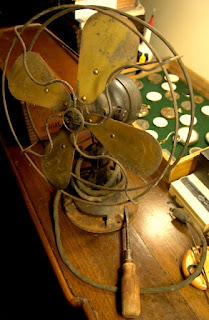
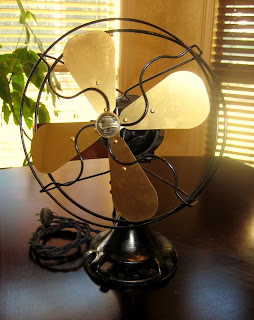
A tired early electric fan returned to a clean, coherent presentation while retaining the character of its original design.
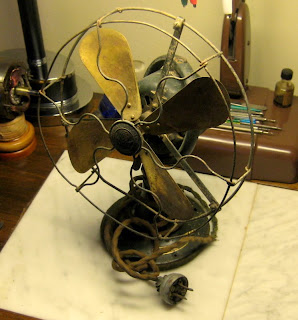
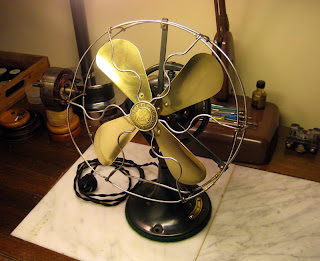
Mechanical cleanup, cosmetic restoration and careful reassembly transform the machine without disguising its century-old engineering.
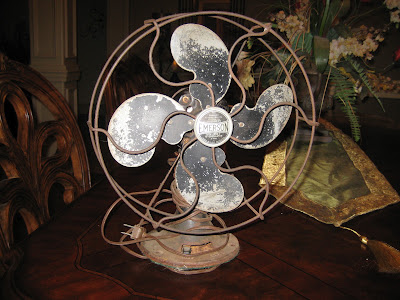
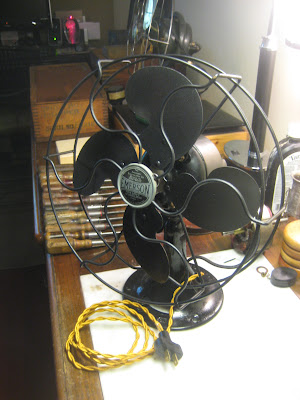
From heavily weathered survivor to a handsome working fan, with the finished machine still unmistakably rooted in its original era.
Tell the workshop what has arrived on your bench. You do not need to know every technical detail. A maker, a few photographs and a good description of what the fan is doing are enough to begin.
Send the maker, model if known, a short description of the problem, and several clear photographs. Include a photo of the data plate or motor tag whenever possible.